
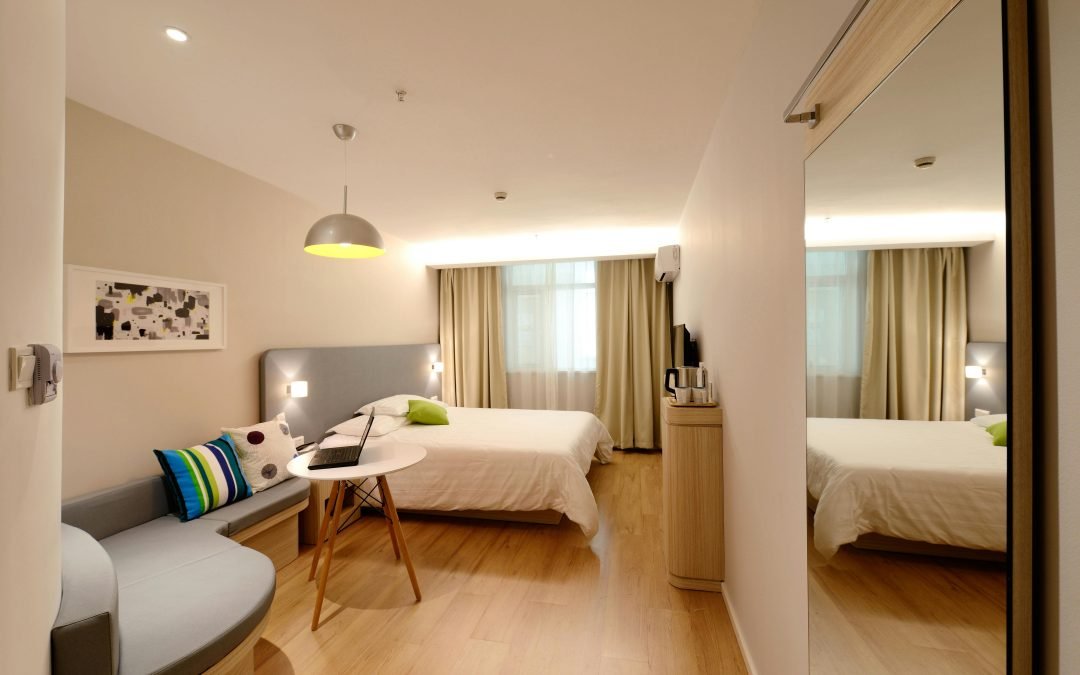
Ever walk into a tiny room and feel instantly cramped? You’re not alone. A small space can feel tight and overwhelming, especially when it’s packed with furniture or poorly lit. But the good news is you don’t need a major renovation to make it feel more spacious. If you’ve been wondering how to make a small room feel bigger, you’re about to learn a few simple, clever design tricks that can truly transform your space.
Whether you’re working with a compact bedroom, a tight living room, or a narrow home office, there are plenty of ways to open it up—visually and functionally.
Start With the Right Color Palette
Color can do wonders for how big or small a space feels. Light, neutral tones tend to reflect more light, making the room appear larger and airier.
- Use colors like white, soft gray, pale blue, or beige
- Stick with one or two hues throughout the room for a cohesive feel
- Paint the ceiling a shade lighter than the walls to create height
According to Sherwin-Williams, rooms painted in soft whites or light neutrals can appear up to 30% larger due to how well they bounce light around.
Choose Furniture Wisely
The size and placement of your furniture can make or break a small room. The goal is to maximize space without overcrowding it.
Here are a few smart choices:
- Choose multi-functional furniture like ottomans with storage or a bed with drawers
- Go for low-profile sofas and chairs that sit closer to the floor
- Avoid bulky, heavy pieces that take up too much visual space
- Use furniture with exposed legs to create a sense of openness underneath
And remember, less is more. Give each piece of furniture a clear purpose, and avoid unnecessary clutter.
Use Mirrors to Expand the Room
Mirrors are one of the oldest and most effective tricks in the book when it comes to making a space feel larger. They reflect both natural and artificial light, doubling the room’s brightness and creating an illusion of depth.
- Hang a large mirror opposite a window to reflect outdoor light
- Use mirrored furniture or wall decor for subtle reflection
- A floor-to-ceiling mirror can elongate the height of the room visually
Even placing a small mirror strategically can instantly make the space feel more open.
Light It Up Right
Lighting plays a huge role in how a space feels. Poorly lit rooms tend to feel tighter and more closed in, while well-lit spaces feel open and inviting.
Here’s how to improve it:
- Layer your lighting: combine ceiling lights, floor lamps, and table lamps
- Use soft white LED bulbs to mimic natural daylight
- Consider installing wall-mounted lights to free up floor and table space
- If possible, avoid heavy window coverings—let the natural light in
When you can’t add windows, use reflective surfaces and proper lighting to brighten dark corners.
Go Vertical
When floor space is limited, think vertically. By drawing the eye upward, you make the room feel taller and more spacious.
Try these tips:
- Install tall bookshelves or storage units
- Hang curtains close to the ceiling rather than just above the window
- Use vertical lines in wall décor or wallpaper patterns
- Choose wall-mounted storage and lighting to free up floor space
Vertical elements help shift focus away from the limited floor area and toward open air above.
Keep It Simple and Clutter-Free
A cluttered room will always feel smaller than it is. The more stuff you have lying around, the more cramped the space feels.
To avoid that:
- Use baskets, bins, or furniture with built-in storage
- Display only your favorite decor pieces
- Keep surfaces clean and clear
- Routinely assess what you really need in the space
A minimalist approach doesn’t mean bare and boring. It just means being intentional with what stays and what goes.
Use Rugs to Define the Space
An area rug can help define zones in a small room and visually anchor furniture. But the key is to size it right.
- Go for a rug large enough to fit all major furniture pieces on top
- Avoid small rugs that break up the floor visually
- Use light or neutral rug colors with subtle patterns
A well-placed rug can unify the space and make it feel more cohesive—and by extension, larger.
Final Thoughts
Figuring out how to make a small room feel bigger isn’t about knocking down walls or spending a fortune. It’s about using color, layout, light, and a few smart design choices to make your space work harder and feel better.
Start by choosing lighter colors, simplifying your furniture, and letting in as much light as possible. Add mirrors, scale furniture to fit, and declutter often. With just a few thoughtful changes, even the smallest space can feel open, functional, and truly inviting.